Time: 17 May, 19:00 - 21:00
Place: G17 Pearson Building, University College London
The usual informal discussions in the pub during our society meetings (and the many amusing directions they can take, ref. Kieran's panda analogy of the Queen) define the essence and drive of this society, namely intellectual curiosity and exchange of ideas. For our second event, we decided to keep a slightly less informal debate out of the pub, centered around a single topic: agnosticism - more specifically, is agnosticism the only logically valid approach to viewing the world?
The impossibility of certainty was compared with the need to establish a pragmatic degree of certainty in order to lead a productive life - "Should scientists abandon their jobs by acknowledging everything they don't know?" The existence of god cannot be disproved, hence from a purely logical point of view, there is no right way to live your life other than agnosticism. However, it was pointed out that there is a difference between actively following agnosticism - considered non-progressive - and merely having it in the back of your head. As with all scientific reasoning, where in this case the non-existence of a god is the null hypothesis and the existence of a god is the alternative hypothesis, definite support for the null hypothesis cannot be established. Instead, a certain confidence level to reach conclusions is set, from which you choose a direction to act on and live your life by.
The extent to which something supports a particular hypothesis was further discussed. On one hand, it was argued the concept of proof can only be found in mathematics and logic. In remaining domains, presumption is a matter of how appropriate the justification for something is. This was questioned with the argument that overwhelmingly strong evidence for something, e.g. fossils, is the closest one can get to truth, hence should be considered proof. However, evidence such as fossils is only proof in a pragmatic sense, it was countered, and conclusions are always open to interpretation.
The difference between having a passive stance and an explicit stance with regards to religion was also considered. People who declare themselves to be "not religious" were observed to often dissociate themselves from the "atheist" label, i.e. not knowing is not the same as believing it is impossible to know, and not believing in god is not the same as believing there is no god. Also, it was mentioned that atheists in the U.S. seemed to be more likely to explicitly declare their view on religion compared to less religious societies.
In conclusion, there was a general agreement that agnosticim might be the only logical stance, but not necessarily the most pragmatic stance. Emphasis was put on the importance of clarifying, when discussing religion - particularly with religious people -, that the vast majority of atheists do not claim there is definite proof against the existence of god.

Tuesday, 31 May 2011

Thursday, 26 May 2011
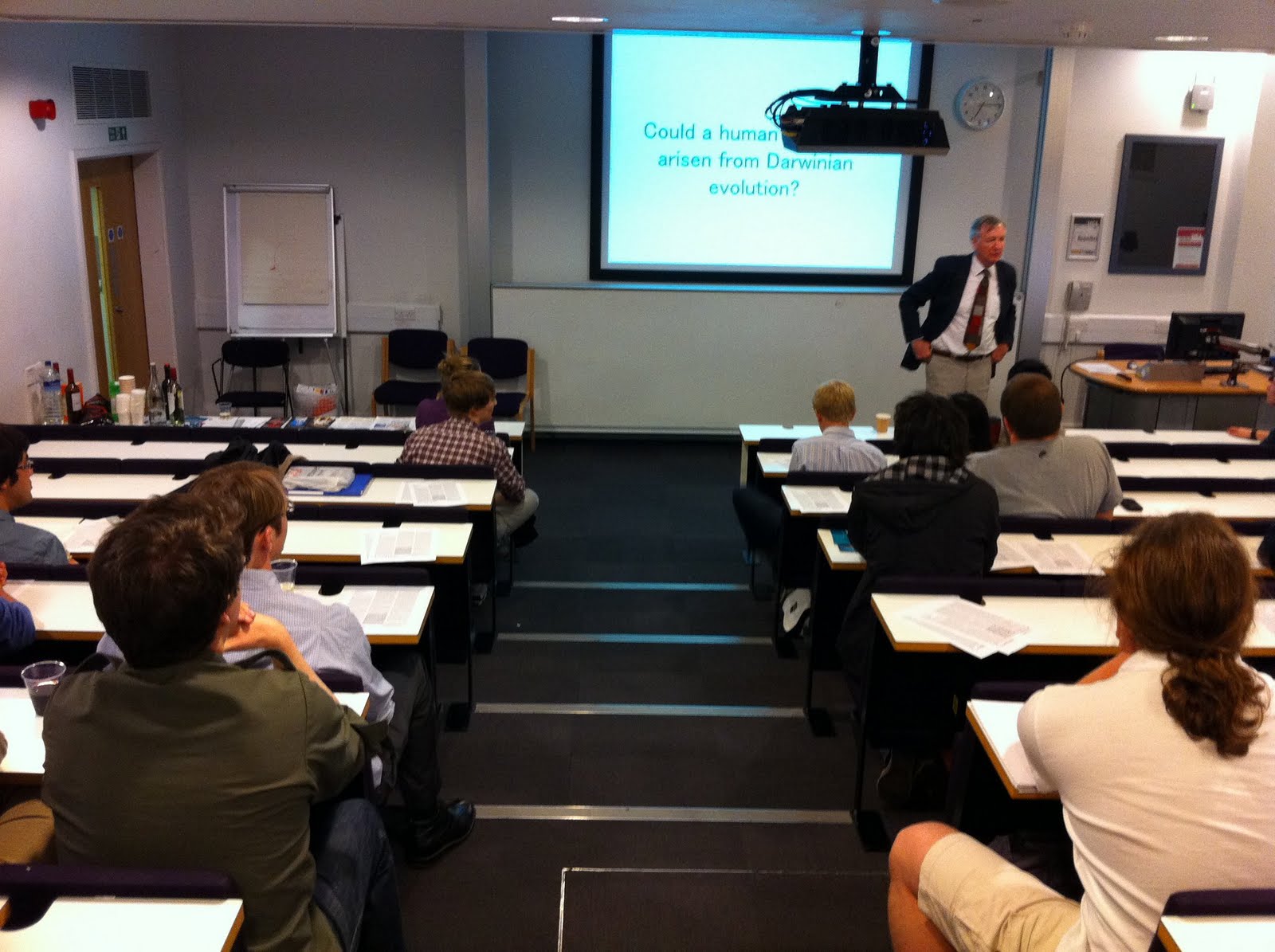
Event report: Prof. John Martin – ’Could a human soul have arisen from Darwinian evolution?’
Time: 3 May 2011, 19:00 - 20:30
Place: G08 Roberts Building, Malet Place, University College London
For our first event of the term, UCLU ASHS invited Professor John Martin, Chair of Cardiovascular Medicine at UCL and Professor Adjunct in Cardiology at Yale University, to hold a talk. With over 25 years of experience as a cardiovascular physician and academic researcher, some of his former roles include Vice President of the European Society of Cardiology and President of the European Society for Clinical Investigation. Additionally, he studied philosophy prior to qualifying from Sheffield University Medical School. He came to us to share his thoughts on human beings – and the human “soul”, in particular – as a qualitative, rather than quantitative, extension from evolution.


Prof. Martin first structured his talk around a number of questions establishing his philosophical view of understanding the universe:
1. Is man machine or not?
Prof. Martin rejected the conventional notion that neurobiology can account for all aspects of human beings as “a load of rubbish”: functional magnetic resonance imaging (fMRI) research does not provide any explanations as to what humans are, but merely anatomical observations.
2. Is experimental science the only truth?
Again, he stressed that science is only a series of measurements and observations, which can generate predictions, but not explanations. Whilst he “believed in Darwinian evolution absolutely”, he also expressed a strong belief in Freudian psychoanalysis as a means to discover the truth about yourself - likening knowledge of the origin of the self with knowledge of the origin of the world.
3. What is the cause of the Big Bang?
Here, he made the suggestion that this cause could be the things it produced, including immutable constants such as pi, Avogadro’s number and the speed of light – indeed, that the nature of god could be these constants. A question was raised from the audience of whether he could simply label this “thing” manifesting itself as physical constants as “God”, to which Prof. Martin referred back to psychoanalysis: “you are your psychoanalytic nature more than your neural connections,” hence, although you cannot use scientific methods to explain the nature of the universe, you can reach an understanding of it through a subjective truth – “it feels true to me.” Not surprisingly, this generated a small debate on what “truth” is.
4. Is religion daft?
Having been brought up a Roman Catholic, he emphasised its important part of European history, and the practicality of prayer as a cheap form of psychoanalysis to better understand oneself. He also stressed that acknowledging the usefulness of religion does not necessarily entail believing in the bearded man in the sky. The audience responded to this by pointing out that it is the practice of verbalising thought to clarify ideas rather than the spiritual element that makes prayer useful: religion in itself is daft – however, we can extract useful parts from it.
5. Is art superior to science?
“Absolutely so.” Superior to the purely observational function of science, Prof. Martin argued, is the ability of art to interpret the internal mechanisms of humans: art, unlike science, cannot exist independently of a creator.
6. Does metaphysics exist?
Although it cannot be tested with the scientific method, he argued it does indeed exist, as “an existing thing cannot exist and not exist at the same time.”
From this, he went on to the main topic of the talk: chimpanzees and humans have nearly identical DNA – although “identical” was disputed among the audience -, yet humans are different in that we have free will and abstract thought. Prof. Martin suggested this difference could not have arisen from a quantitative mechanism, but from a qualitative one, i.e. humans have an "abstractor" independent of our constituent biological building blocks. To illustrate this point further, he paralleled this with a symphony existing independently of its constituent notes, or even the difference between a bent and straightened finger existing independently of the finger itself. What we consider the human soul, then, could be a manifestation of this abstractor of consciousness and free will, which at some point in evolution evolved by leaping off the quantitative progression above a certain threshold.


Prof. Martin made several postulations that generated questions from the audience, e.g. how can we know that chimpanzees do not have abstract thought, or even that human consciousness is not just an artifact of biological reflexes? Is it not more parsimonious to argue abstract thought evolved from an expansion of the cerebral cortex, rather than a qualitative threshold event? When determinism was brought up, for instance, he replied he accepts the possibility of determinism, yet acts on the assumption that we have free will, as it enhances his life and gives it happiness and pleasure. In sum, Prof. Martin argued his conjecture was a philosophical one, hence one must look beyond the trivialities of science.
Further discussion of Prof. Martin's ideas (objections to them, by and large) followed at Jeremy Bentham's, before it dissolved into various topics - including the recent Royal Wedding. We hope all who attended enjoyed the talk and the break from revision for those who had exams!
Click here for an article Prof. Martin wrote on the topic covered in the talk.
Sunday, 13 March 2011
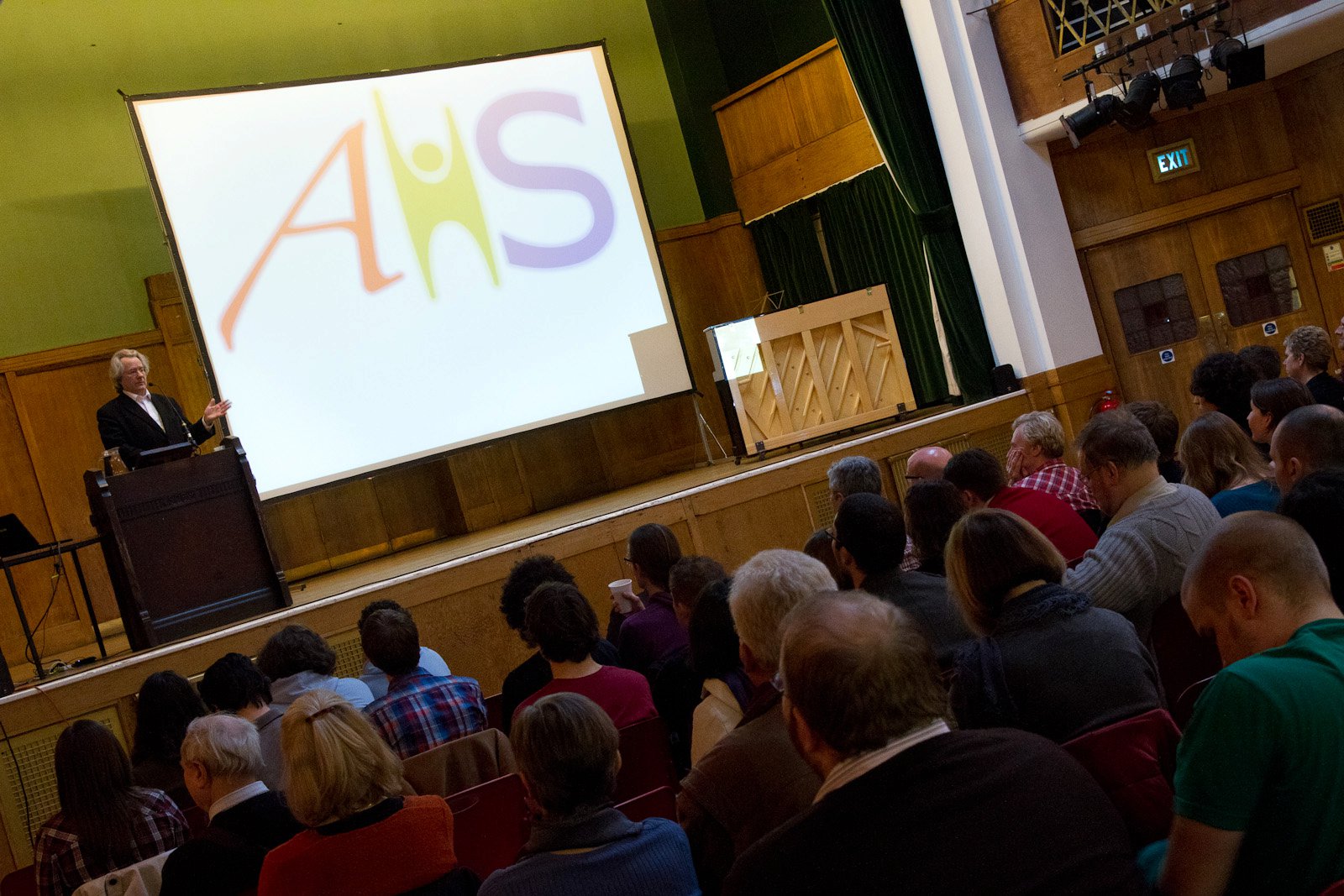
The AHS National Convention 12-13 March 2011
 This weekend, UCLU ASHS attended the AHS third annual National Convention since its conception in 2008. It was held at Conway Hall, Holborn on Saturday's Speakers Day, and in the Cruciform Building, University College London on Sunday's Committee Day. The full programme for the entire weekend can be found here.
A fair was held throughout Saturday in which UCLU ASHS participated with our own stand along with various other organisations and student societies promoting atheist, secularist and humanist interests (a full list can be found in the above link).

The early-afternoon speakers included Lord Warner of Brockley, Labour member of the House of Lords and chair of the All Party Parliamentary Humanist Group; Gerard Phillips, Vice-President of the NSS; and Andrew Copson, Chief Executive of the BHA. The late-afternoon speakers included stand-up comedian Robin Ince; Johann Hari, journalist for The Independent and The Huffington Post; and the distinguished philosopher, author and BHA Vice-President A.C. Grayling. Topics ranged from the implications of religious figures in the House of Lords and the Census Campaign, to faith schools and whether lack of religion leads to
nihilism. In particular, Ince and Hari - the latter humourously introducing his talk with the time the Dalai Lama called him fat - elicited much enthusiasm amongst the audience. The Pod Delusion recorded podcasts of the talks.
A performance by the BHA choir - including a lovely rendition of John Lennon's Imagine and Every Sperm Is Sacred - marked the end of an excellent day. Lively debate was subsequently carried out in the nearby pub, The Enterprise.
Sunday was specifically tailored for atheist, secularist and humanist student society committees. In addition to UCLU ASHS, delegates from universities of Aston, Bristol, Durham, Lancaster, Leeds, Liverpool, LSE, OU, QMU, Southampton, Surrey, UAL, as well as UCC were present. The day began with a reprise of the BHA choir's performance of Do You Realize?? from the day before, this time by the delegates themselves. This, as well as the workshops on how to start a new society; sustainability and finance; debating (with Andrew Copson pretending to be Christian for the occasion); dealing with the media; and running a "Reason Week" were all well-received.
In the second half of the afternoon, the EGM resulted in the election of James Murray from Leeds Atheist Society as the new AHS Treasurer; and the decision to expand the AHS to cover Ireland - both by unanimous vote.

Following the launch of the AHS campaigns initiative to encourage societies to campaign for e.g. BHA issues around campus, as well as an AHS member feedback session, society awards were handed out. Adding to our sense of self-importance, the announcements of these were made by A.C. Grayling - although admittedly via video recording. Congratulations to UCC Atheists on winning Best Single Event for their talk by Daniel Dennett; Oxford Atheists Society for Best Reason Week; Aston Humanist Society for Most Raised During Non-Prophet Week; and Bristol Atheist, Agnostic and Secular Society on winning Best Society.
UCLU ASHS was very pleased to receive two awards: Best Collaborative Event jointly with LSE, QMU and UAL for the Intercollegiate Atheist Charity Pub Quiz on 17 February, which helped raise £500 for Non-Prophet Week; and Best New Society jointly with Bradford Atheist and Humanist Society. These are great testaments to what we have accomplished since our initial formation in mid-2010 and subseq
 uent affiliation in January 2011, and provides further encouragement to the future of our society.
Many thanks to President of the AHS, Richy Thompson, the BHA and all others involved for organising an outstanding event - we greatly look forward to next year's convention.
Photos: Andrew West, The AHS
Saturday, 12 March 2011
Event report: Paul Sims - "Is there any point in talking to believers?
Time: 2 March 2011
Place: Bentham Seminar Room 3, Bentham House, UCL
UCLU ASHS hosted a talk by Paul Sims on the topic, "Is there any point in talking to believers?" Paul Sims is the News Editor of New Humanist Magazine, published by the Rationalist Association since 1885, and runs the New Humanist blog. His magazine features have explored topics ranging from Islamic extremism to creationist zoos.
Sims introduced the talk by expressing his personal opinions on the public reaction to the four-day Papal visit to England and Scotland in September 2010. Acknowledging that the Vatican does have much to answer for regarding the allegations of child abuse, he deemed the debate surrounding the visit "hysterical" and "over-the-top." In particular, he criticised Richard Dawkins' speech at the Protest the Pope rally, during which Dawkins considered the Pope "an enemy of humanity." Sims questioned what is actually achieved when an atheist spokesperson such as Dawkins publicly expresses aggressive atheism to this extent, fuelling anti-religious hostility amongst the public. Must secularism and religion be framed as a battle between two camps? On the contrary, Sims stressed that reasoned debate between individuals, and constructive criticism would be significantly more beneficial - for secularists and religious people alike.
Subsequent questions from the audience sparked interesting debate: can reasoned discussions achieve any more than aggressive atheism can, when people enter debates, not with the intention of changing their minds, but of forwarding their own views? It was argued that people rarely, if ever, are converted in either direction via debate alone; and that aggressive atheism may in fact raise awareness and shock people into critical thinking. To this, however, a remark was made about the interesting outcome of the Intelligence Squared debate, "Is the Catholic Church a force for good in the world?", whereby a substantial number of audience members changed their initial "for Catholic Church" or "undecided" views, to believing the Catholic Church not to be a force for good.
Furthermore, the issue was raised of whether a nuanced middle ground between secularism and religion is in actuality possible, or whether the existence of both in society necessitates polarisation. While balanced teaching of religion and critical thinking can be promoted in school, the role of the state in de facto discouraging religious devotion was questioned.
After the talk, speaker with audience members relocated to the pub for more informal discussion.
Feel free to add any comments below, and keep an eye on our Facebook group for upcoming events!
Wednesday, 9 March 2011
"Why are you atheists so angry all the time?"
Greta Christina, a freelance writer who frequently blogs about atheism, politics and sex, explains why atheists are - and should continue to be - angry in this brilliant blog post.


Subscribe to:
Posts (Atom)